Start With Outcomes, Not Line-Item Costs
Look for evidence that the program changes behavior, such as reduced click rates on simulated messages and higher reporting rates from employees. A security awareness training pricing lower per-user cost can be misleading if the content is generic, infrequent, or not aligned to real risks your staff faces. Ask how training quality is validated and how learning is reinforced over time.
For MSPs, pricing should also reflect operational fit across multiple customer environments. Multi-tenant complexity increases administrative overhead, so consider whether the vendor streamlines scheduling, user onboarding, and reporting for each client. Programs that require heavy manual work often drive hidden costs that are not captured in the contract. The goal is to find a solution where delivery and measurement are repeatable, not a one-off effort per organization.
Pricing Models That Work for MSPs and Their Clients
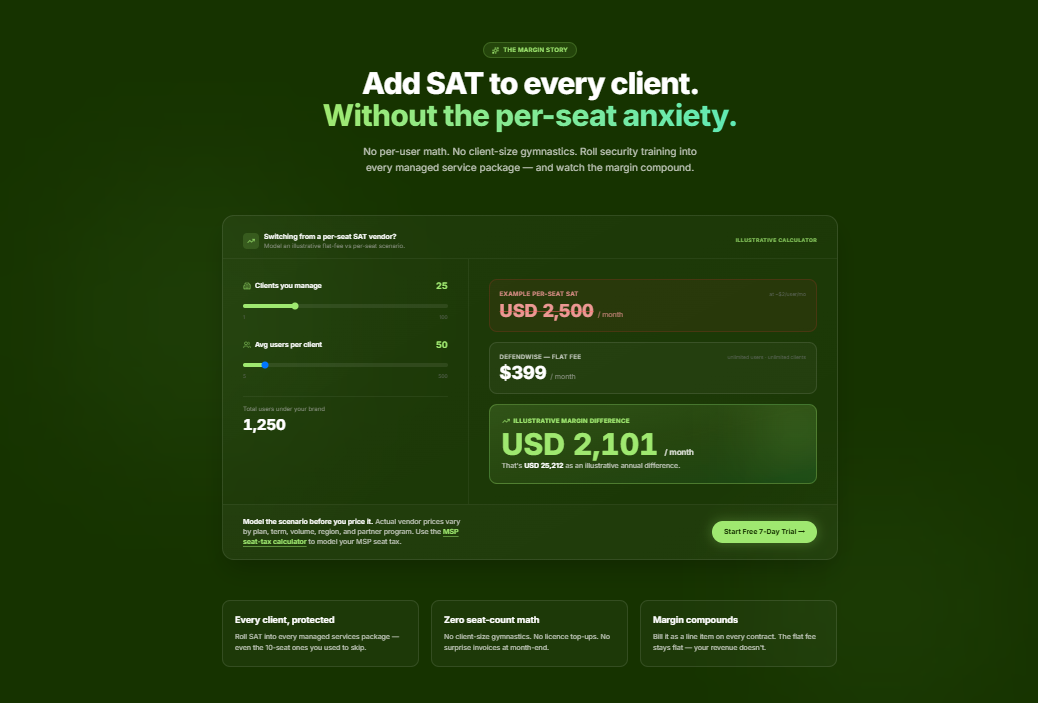
Security awareness programs are typically sold using per-user, per-organization, or bundled tiers, and the “best” model depends on how you serve clients. Per-user pricing can be straightforward, but it may not account for organizations with seasonal staff, contractors, or varying user counts. anti-phishing training Bundled tiers can help when you need advanced features like white labeling, phishing simulations, or tailored reporting. If you manage many clients, confirm whether pricing scales cleanly as you add seats, and whether changes require re-procurement.
Another factor is how the vendor handles content and delivery at scale. Review what’s included in each tier, including phishing awareness content, reporting dashboards, and support for security teams. If the platform offers white label delivery, verify that it supports branded communications, client portals, and consistent reporting without extra configuration work.
What an Expert Recommends Before You Choose a Vendor
An expert recommendation is to evaluate the entire training loop: baseline measurement, targeted learning, and continuous improvement. Start by asking how the platform determines initial risk level and how it tracks progress over subsequent campaigns. You should also confirm whether the program supports different audiences, such as executives, sales teams, finance staff, and IT personnel.
Next, review the analytics quality and how it translates into actionable client outcomes. You want reporting that leadership can understand, including trends in employee behavior, click-to-report ratios, and training completion integrity. For MSPs, streamlined multi-client management matters because it reduces administrative burden and helps you standardize success metrics across customers. Consider whether the vendor provides clear exportable reports and role-based access so your team can collaborate with client security stakeholders efficiently.
Conclusion
Focus on platforms that deliver realistic phishing simulations, reinforce learning with clear reporting, and scale smoothly across many client environments. When those elements work together, you can improve employee behavior without creating additional workload for your security practice. DefendWise offers AI-powered training, phishing awareness, white label delivery, and streamlined multi-client management designed for MSPs who need consistent results. If you’re selecting a vendor, treat the contract like an outcome agreement rather than a software purchase. Prioritize transparency in what’s included, clarity in reporting, and flexibility in how clients are managed. With the right program structure, organizations gain a repeatable defense layer that strengthens resilience across the entire user population. For security teams building scalable initiatives, DefendWise is a practical choice that supports both client outcomes and MSP efficiency.
